Blog · AI agents and workflows
How to Write Content for AI Search That Gets Quoted
Answer-first headings, short quotable answers and sourced facts, built from Microsoft and Google guidance, with a before-and-after rewrite and a six-point page check.
By Dijae Dadula · November 27, 2026 · 9 min read
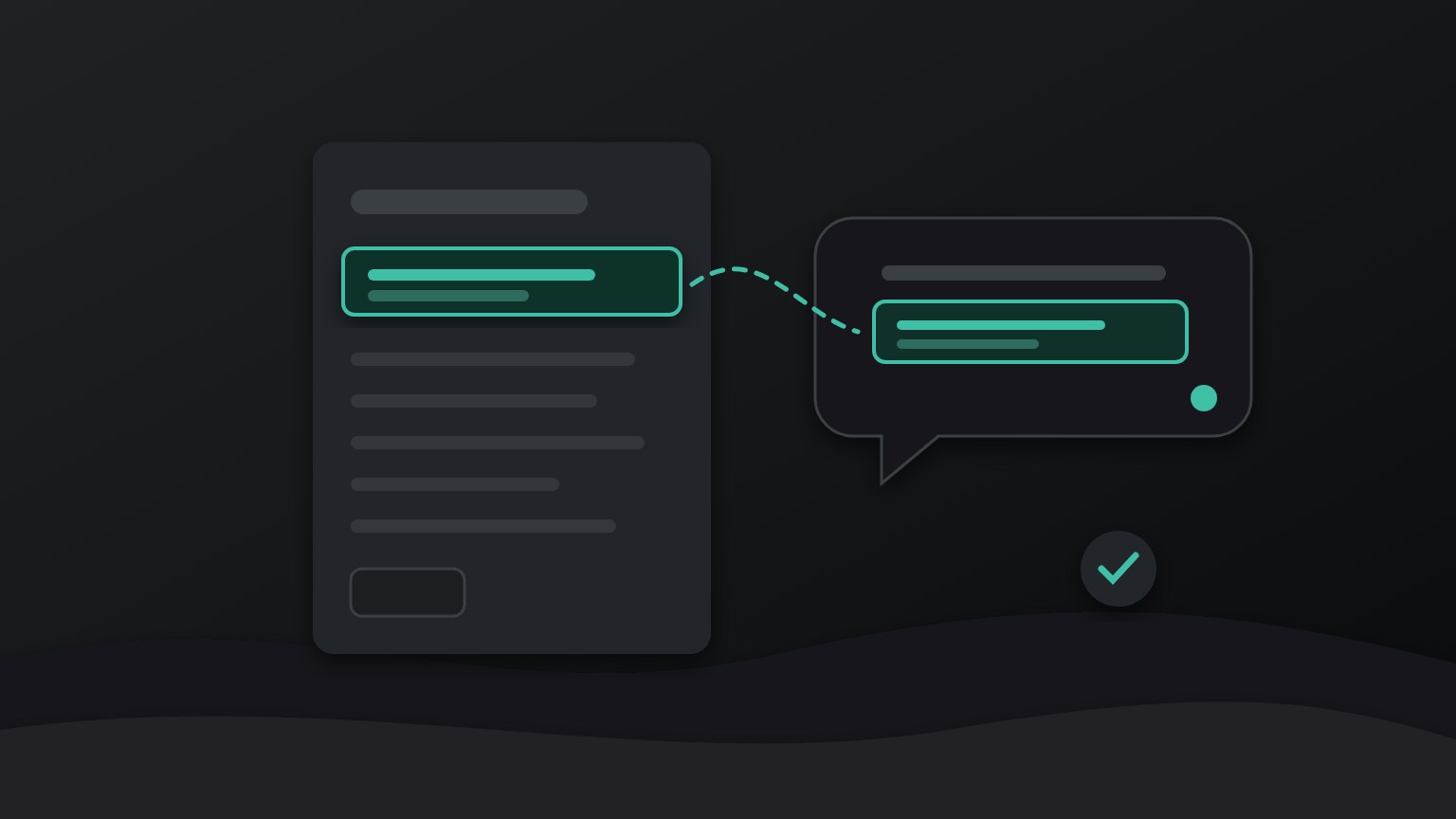
To write content for AI search, answer each question your customers ask in one or two plain sentences right under a heading that uses their words. Then back that answer with specific, dated facts and sources. AI assistants such as ChatGPT, Perplexity, Copilot and Google's AI Overviews quote passages that make sense on their own. A page that buries the answer under three paragraphs of background gives them nothing to lift.
A Cavite aircon cleaning business has a service page titled “Our Services”. It opens with a story about how the company started, lists “quality cleaning at affordable rates”, and puts the price list inside a photo. A homeowner asks an AI assistant how much split-type aircon cleaning costs nearby and how long it takes. The assistant answers with two other businesses. Their pages state the price, the time per unit and the areas served in plain text.
Answer-first content is a page where every heading asks a real question and the first sentence under it fully answers it.
This guide shows how to write for AI search, using what Microsoft and Google have published about their own AI answers and a peer-reviewed study on what makes pages more visible in them. It is part of the GEO series on this blog. If you are new to the idea, start with What Is Generative Engine Optimization (GEO)? and How AI Assistants Decide Which Businesses to Recommend.
- How do you write content for AI search that gets quoted?
- What does answer-first writing look like?
- How should you structure headings, lists and FAQs?
- What do Google and Microsoft say you don't need?
- Which facts make AI search trust a page?
- How do you check a page before you publish?
- What can you set up today?
- Frequently asked questions
How do you write content for AI search that gets quoted?
Short answer: clear headings, short self-contained answers, and specific facts in plain HTML text.
Microsoft has been unusually direct about this. On October 8, 2025, Krishna Madhavan, a principal product manager on Microsoft Bing, published guidance on getting content included in AI search answers. It asks for descriptive headings that mark where each idea starts and ends. It recommends question-and-answer formats, lists and tables, and concise answers of one or two sentences that still make sense when extracted. It also says to keep key information in the HTML, not hidden in tabs, PDFs or images. For reference, check the guidance here.
The idea behind it is simple. An assistant reads many pages and quotes a few sentences from each. If your best answer only makes sense after reading the paragraph before it, the assistant has to work harder to use it, and another page will be easier.
What does answer-first writing look like?
Short answer: the question as the heading, the answer in the first sentence, then the detail, proof and exceptions.
Most business pages run in the order the owner thinks: background, credentials, features, and finally the answer. Answer-first content reverses that. The reader, and the assistant, gets the answer immediately and can keep reading for the reasons.
Here is the same idea as text you can copy. Replace the bracketed parts with your own facts.
## How much does [service] cost in [area]?
[Service] costs [price] per [unit] and takes about [time]. The price includes [what is included].
We serve [areas]. Prices were last checked on [date].

**What changes the price?** [1-3 factors, one line each]Writing for AI search means writing for robots, so the page will read badly for people.
Google tells site owners to focus on unique, helpful content for people. Answer-first pages are easier for busy customers too.
How should you structure headings, lists and FAQs?
Short answer: one idea per heading, a list or table when you compare or sequence things, and an FAQ for the follow-up questions.
Write H2s as the questions people type: “How long does it take?”, “Do you serve Imus?”, “What is included?”. Avoid labels like “Learn more” or “Overview”, which say nothing about what follows. Use numbered steps for a process, a table for a comparison, and bullets only for short items. The Microsoft guidance also warns against long walls of text and overloaded sentences that pack several claims into one line.
An FAQ at the end of the page catches the questions that do not deserve a full section. Keep each answer to two or three sentences, and write the answer so it is complete without the question above it.
What do Google and Microsoft say you don't need?
Short answer: no special AI files, no new markup, and no chopping your content into tiny pieces.
Google's guide to optimizing for its generative AI features, last updated July 10, 2026, says you don't need to create new machine-readable files, AI text files, markup or Markdown to appear in Google Search. It says there is no requirement to break content into tiny pieces. An llms.txt file will neither help nor harm your visibility in Google Search. Structured data is still useful for rich results, but it is not required for generative AI search. For reference, check the documentation here.
That fits Microsoft's advice rather than contradicting it. Microsoft asks for clear sections and short answers, which is good writing, not fragmentation. Both companies say the technical basics still matter. Google says a page must be crawlable and indexed to be eligible for its AI features, and Microsoft names crawlability, metadata and internal linking as the baseline.
You need an llms.txt file or special AI schema before assistants will quote you.
Google says neither is required for its AI features. Clear, crawlable, specific pages come first.
Which facts make AI search trust a page?
Short answer: specific, checkable facts: numbers with units, dates, named sources and clear conditions.
The “GEO: Generative Engine Optimization” study by Aggarwal and colleagues, presented at the ACM KDD conference in 2024, tested ways of rewriting web content. It found that methods such as adding cited sources, quotations and statistics improved visibility in generative engine answers by up to 40%. Keyword stuffing, a classic SEO trick, gave little to no improvement and scored below the unchanged page on the main visibility measure, and the best method varied by topic (Aggarwal et al.).
For small business content for AI search, that translates into habits you can keep. Replace “affordable” with the actual price. Replace “fast” with the actual time. Say when a fact was last checked. Link the rule, standard or document you rely on. Microsoft makes the same point: swap vague words like “innovative” for measurable facts, and anchor every claim.
If a customer could ask it, answer it in one sentence on your website. An assistant can only repeat what it can read.
How do you check a page before you publish?
Short answer: run a six-point check, then ask the assistants your real customer questions once a month.
| Check | Pass when |
|---|---|
| Question headings | Every H2 is a question a customer would type |
| Answer first | The first sentence under each H2 answers it fully, without the paragraph before |
| Plain-text facts | Prices, hours, areas and steps are text, not only in images, tabs or PDFs |
| Specific claims | No vague adjective is left without a number, date or condition |
| Sources and dates | Every outside fact links its source and says when it was checked |
| FAQ | 3-5 real follow-up questions, each answered in two or three sentences |
The metric to watch is simple: out of ten buyer questions you test each month in ChatGPT, Perplexity, Copilot and Google, how many name or link your business? Record the answer and compare it month to month. Bing Webmaster Tools also has an AI Performance report, in public preview since February 10, 2026, that shows the AI citations your pages earn in Microsoft Copilot and Bing's AI summaries. For reference, check the documentation here.
What can you set up today?
- List the ten questions customers ask before they buy.
- Pick your most important service page and rewrite its headings as those questions.
- Put a one- or two-sentence answer directly under each heading.
- Move any price list, schedule or key fact out of images and into text.
- Add an FAQ with the follow-up questions, then run the six-point check above.
What this cannot promise
An honest limitation: answer-first writing makes a page easier to quote, but it cannot guarantee a citation. No AI platform publishes how it chooses sources, answers change between runs and models, and a page that cannot be crawled or indexed will not be read at all. Write well, keep the technical basics in order, and measure what actually happens.
Frequently asked questions
How do I write content for AI search?
Use customer questions as headings, answer each one in one or two sentences directly underneath, then add specific facts, dates and sources. Keep key information in plain text and end with a short FAQ.
How do I get cited by ChatGPT and Perplexity?
No platform publishes its citation criteria. What helps is a page their search crawlers can reach, clear answers that stand alone, and specific facts with sources. Test your key questions in each assistant monthly to see what changes.
Do FAQs help with Google AI Overviews?
FAQs give clear, self-contained answers to real questions, which matches the structure Microsoft recommends for AI answers. Google says no special markup is required for its AI features, so write the FAQ for people first.
Should I rewrite my whole website for AI search?
No. Start with the pages that answer buying questions: services, prices, areas served and how to book. Rewrite one page, check it with the six points above, then move to the next.
References
- Krishna Madhavan, Microsoft Bing, “Optimizing your content for inclusion in AI search answers,” Microsoft Advertising blog, October 2025. about.ads.microsoft.com
- Google Search Central, guide to optimizing for generative AI features in Google Search, last updated July 10, 2026. developers.google.com
- Google Search Central, “AI features and your website.” developers.google.com
- Microsoft Bing, “Introducing AI Performance in Bing Webmaster Tools Public Preview,” Bing Webmaster Blog, February 10, 2026. blogs.bing.com
- Aggarwal, Murahari, Rajpurohit, Kalyan, Narasimhan and Deshpande, “GEO: Generative Engine Optimization,” KDD 2024. arxiv.org
Keep reading
Get one practical idea like this every week
Join the free newsletter on AI agents, automation and turning your skills into income. Prefer video? Watch the walkthroughs on YouTube.
Want a system like this built for your business? Book a free AI Automation Blueprint call, or see the done-for-you services at my consultancy, IRD Digital Marketing Services.
DIJAE DADULA
Dijae Dadula · AI automation and systems specialist · Cavite, Philippines · Founder of IRD Digital Marketing Services
Home · Blog · Book a call · Newsletter · YouTube · Threads · Transparency
Some links on this site are affiliate links. If you buy through them, I may earn a commission at no extra cost to you.
© 2026 Dijae Dadula. All rights reserved.
